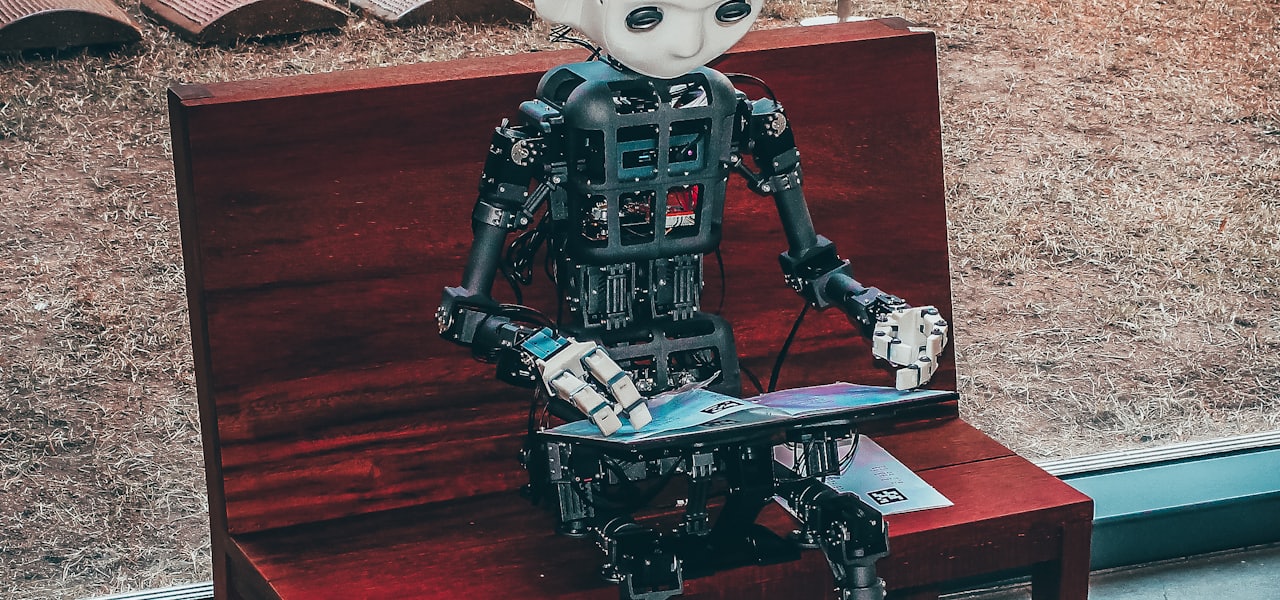
Creepy treehouse is a social media term, or internet slang, referring to websites or technologies that are used for educational purposes but regarded by students as an invasion of privacy. == History == The term was first described in 2008 by Utah Valley University instructional-design services director Jared Stein as "institutionally controlled technology/tool that emulates or mimics pre-existing [sic] technologies or tools that may already be in use by the learners, or by learners' peer groups." This was when social media such as Facebook was starting to become mainstream and professors would try and get students to interact with them on the site for educational purposes. Some professors would require their students to use Facebook or Twitter as part of class assignments. == Usage == The term was first described as "technological innovations by faculty members that make students’ skin crawl." The term also refers to online accounts and websites that users tend to avoid, especially young people who avoid visiting the pages of educators and other adults. Author Martin Weller defines creepy treehouse as a digital space where authority figures are viewed as invading younger people's privacy. One such example is a professor giving his students an option to use a popular video game to learn about history instead of writing an essay. Students in that class chose to write the essay instead as the method was previously unmentioned and it was not an unnatural method of interaction. Another example given was Blackboard Sync, a feature that was used to connect the school website Blackboard with students' Facebook accounts. == Solutions == University of Regina professor Alec Couros suggests that instead of "forcing" student participation with their own digital platforms, professors should use methods like online forums. Jason Jones of chronicle.com suggested letting students create social media groups for the class themselves and explaining why using technologies is required and important.
Anti-Grain Geometry
Anti-Grain Geometry (AGG) is a 2D rendering graphics library written in C++. It features anti-aliasing and sub-pixel resolution. It is not a graphics library, per se, but rather a framework to build a graphics library upon. The library is operating system independent and renders to an abstract memory object. It comes with examples interfaced to the X Window System, Microsoft Windows, Mac OS X, AmigaOS, BeOS, SDL. The examples also include an SVG viewer. The design of AGG uses C++ templates only at a very high level, rather than extensively, to achieve the flexibility to plug custom classes into the rendering pipeline, without requiring a rigid class hierarchy, and allows the compiler to inline many of the method calls for high performance. For a library of its complexity, it is remarkably lightweight: it has no dependencies above the standard C++ libraries and it avoids the C++ STL in the implementation of the basic algorithms. The implicit interfaces are not well documented, however, and this can make the learning process quite cumbersome. While AGG version 2.5 is licensed under the GNU General Public License, version 2 or greater, AGG version 2.4 is still available under the 3-clause BSD license and is virtually the same as version 2.5. == History == Active development of the AGG codebase stalled in 2006, around the time of the v2.5 release, due to shifting priorities of its main developer and maintainer Maxim Shemanarev. M. Shemanarev remained active in the community until his sudden death in 2013. Development has continued on a fork of the more liberally licensed v2.4 on SourceForge.net. == Usage == The Haiku operating system uses AGG in its windowing system. It is one of the renderers available for use in GNU's Gnash Flash player. Graphical version of Rebol language interpreter is using AGG for scalable vector graphics DRAW dialect. Hilti uses it in some of their rebar detection tools, like the PS 1000. Matplotlib uses AGG as its canonical renderer for interactive user interfaces. fpGUI Toolkit has an optional AggPas back-end rendering engine. Work is being done to make AggPas the default or sole rendering engine for fpGUI. Mapnik, the toolkit that renders the maps on the OpenStreetMap website, uses AGG for all its bitmap map rendering by default. HTTPhotos uses AGG to scale photos. Pdfium, the PDF rendering engine used by Google Chrome makes use of AGG, although work is progressing to replace this with Skia Graphics Engine. Graphics Mill, the .NET imaging SDK uses AGG as its drawing engine. Image-Line FL Studio, a digital audio workstation, since version 10.8 released on September 30, 2012, uses AGG for drawing. Native Instruments's Supercharger and Supercharger GT compressors use AGG for its user interface. == Author == The main author of the library was Maxim Shemanarev (Russian: Максим Шеманарёв). On November 26, 2013 Shemanarev (born June 15, 1966, Nizhny Novgorod, Russia) was reported dead at the age of 47 at his home in Columbia, Maryland (US). He died suddenly, allegedly from an epileptic seizure that he had suffered for a while. He was a graduate from Nizhny Novgorod State Technical University. Little is known about his personal life. It's known though that he was divorced and his mother was alive at the time of his death. He used to love skiing, snowboarding (in Colorado), and inline skating. He was praised by his friends for his intelligent programming skills.
Artificial wisdom
Artificial wisdom (AW) is an artificial intelligence (AI) system which is able to display the human traits of wisdom and morals while being able to contemplate its own “endpoint”. Artificial wisdom can be described as artificial intelligence reaching the top-level of decision-making when confronted with the most complex challenging situations. The term artificial wisdom is used when the "intelligence" is based on more than by chance collecting and interpreting data, but by design enriched with smart and conscience strategies that wise people would use. == Overview == The goal of artificial wisdom is to create artificial intelligence that can successfully replicate the “uniquely human trait[s]” of having wisdom and morals as closely as possible. Thus, artificial wisdom, must “incorporate [the] ethical and moral considerations” of the data it uses. There are also many significant ethical and legal implications of AW which are compounded by the rapid advances in AI and related technologies alongside the lack of the development of ethics, guidelines, and regulations without the oversight of any kind of overarching advisory board. Additionally, there are challenges in how to develop, test, and implement AW in real world scenarios. Existing tests do not test the internal thought process by which a computer system reaches its conclusion, only the result of said process. When examining computer-aided wisdom; the partnership of artificial intelligence and contemplative neuroscience, concerns regarding the future of artificial intelligence shift to a more optimistic viewpoint. This artificial wisdom forms the basis of Louis Molnar's monographic article on artificial philosophy, where he coined the term and proposes how artificial intelligence might view its place in the grand scheme of things. == Definitions == There are no universal or standardized definitions for human intelligence, artificial intelligence, human wisdom, or artificial wisdom. However, the DIKW pyramid, describes the continuum of relationship between data, information, knowledge, and wisdom, puts wisdom at the highest level in its hierarchy. Gottfredson defines intelligence as “the ability to reason, plan, solve problems, think abstractly, comprehend complex ideas, learn quickly, and learn from experience”. Definitions for wisdom typically include requiring: The ability for emotional regulation, Pro-social behaviors (e.g., empathy, compassion, and altruism), Self-reflection, “A balance between decisiveness and acceptance of uncertainty and diversity of perspectives, and social advising.” As previously defined, Artificial Wisdom would then be an AI system which is able to solve problems via “an understanding of…context, ethics and moral principles,” rather than simple pre-defined inputs or “learned patterns.” Some scientists have also considered the field of artificial consciousness. However, Jeste states that “…it is generally agreed that only humans can have consciousness, autonomy, will, and theory of mind.” An artificially wise system must also be able to contemplate its end goal and recognize its own ignorance. Additionally, to contemplate its end goal, a wise system must have a “correct conception of worthwhile goals (broadly speaking) or well-being (narrowly speaking)”. "Stephen Grimm further suggests that the following three types of knowledge are individually necessary for wisdom: first, "knowledge of what is good or important for well-being", second, "knowledge of one’s standing, relative to what is good or important for well-being", and third, "knowledge of a strategy for obtaining what is good or important for wellbeing."" == Problems == There are notable problems with attempting to create an artificially wise system. Consciousness, autonomy, and will are considered strictly human features. === Values === There are significant ethical and philosophical issues when attempting to create an intelligent or a wise system. Notably, whose moral values will be used to train the system to be wise. Differing moral values and prejudice can already be seen from various organizations and governments in artificial intelligence. Deployment strategies and values of Artificial Wisdom will conflict between leaders, companies, and countries. Nusbaum states, “When values are in conflict, leaders often make choices that are clever or smart about their own needs, but are often not wise.” === Ethics === Science fiction author Isaac Asimov realized the need to control the technology in the 1940s when he wrote the three laws of robotics as follows: A robot may not injure a human directly or indirectly. A robot must obey human’s orders. A robot should seek to protect its own existence. Additionally, the pace at which technology is rapidly advancing artificial intelligence and thus the need for artificial wisdom may “have outpaced the development of societal guidelines have raised serious questions about the ethics and morality of AI, and called for international oversight and regulations to ensure safety.” === Principal impossibility === One argument, coined by Tsai as the “argument against AW,” or AAAW, postulates the principal impossibility of Artificial Wisdom. The argument is based on the philosophical differences between practical wisdom, also called phronesis, and practical intelligence. Said difference isn’t in “selecting the correct means, but reasoning correctly about what ends to follow”. Tsai puts the argument into a logical proposition as follows: “(P1) An agent is genuinely wise only if the agent can deliberate about the final goal of the domain in which the agent is situated.” “(P2) An intelligent agent cannot deliberate about the final goal of the domain in which the agent is situated.” “(C1) An intelligent agent cannot be genuinely wise.” “(P3) An AW is, at its core, intelligent.” “(C2) An AW cannot be genuinely wise.”
Relational data mining
Relational data mining is the data mining technique for relational databases. Unlike traditional data mining algorithms, which look for patterns in a single table (propositional patterns), relational data mining algorithms look for patterns among multiple tables (relational patterns). For most types of propositional patterns, there are corresponding relational patterns. For example, there are relational classification rules (relational classification), relational regression tree, and relational association rules. There are several approaches to relational data mining: Inductive Logic Programming (ILP) Statistical Relational Learning (SRL) Graph Mining Propositionalization Multi-view learning == Algorithms == Multi-Relation Association Rules: Multi-Relation Association Rules (MRAR) is a new class of association rules which in contrast to primitive, simple and even multi-relational association rules (that are usually extracted from multi-relational databases), each rule item consists of one entity but several relations. These relations indicate indirect relationship between the entities. Consider the following MRAR where the first item consists of three relations live in, nearby and humid: “Those who live in a place which is near by a city with humid climate type and also are younger than 20 -> their health condition is good”. Such association rules are extractable from RDBMS data or semantic web data. == Software == Safarii: a Data Mining environment for analysing large relational databases based on a multi-relational data mining engine. Dataconda: a software, free for research and teaching purposes, that helps mining relational databases without the use of SQL. == Datasets == Relational dataset repository: a collection of publicly available relational datasets.
Smart speaker industry in South Korea
Smart speakers, or AI speakers, have been developed by multiple domestic electronics and telecommunications firms in South Korea. Since their introduction to the local market in 2016, they have been used by millions of people in the country. == Brands == === Google === In September 2018, Google Home (including the Google Home Mini) launched in South Korea. Running Google Assistant, it featured simultaneous recognition of two languages among a total of seven, including Korean. At launch, it could play music from Bugs!, in addition to YouTube. === Kakao === In November 2017, Kakao launched the Kakao Mini, featuring integrated KakaoTalk functionality. === KT === KT launched the GiGA Genie smart speaker in January 2017, using a Harman Kardon speaker. In November 2017, KT announced GiGA Genie LTE, a portable AI speaker with LTE support. They also released a mini speaker called GiGA Genie Buddy. In 2018, KT created a special version of GiGa Genie with a screen for use in hotels. On 29 April 2019, KT announced the GiGA Genie Table TV, a consumer-oriented smart speaker with a display. It featured paid TV access through Wi-Fi. Based on usage data from the hotel model, KT decided not to add a touchscreen. The Table TV also featured a limited-access "personalized-text-to-speech technology" which could use parents' voice recording inputs to read children books. In February 2022, KT began rolling out Amazon Alexa integration into its speakers for English support. === Naver === In August 2017, Naver announced the Wave smart speaker, operating on Clova. In October 2017, Naver launched the Friends smart speaker, which were designed based on Line characters. ==== LG Uplus ==== In December 2017, LG Uplus launched the Friends+ speaker with Naver, operating on U+ Home AI. === Samsung === In August 2018, Samsung announced the Samsung Galaxy Home in partnership with Spotify. The original size was delayed, while the Galaxy Home Mini appeared briefly as a bonus for Samsung Galaxy S20 preorders in South Korea in February 2020. === SK Telecom === SK Telecom launched the Nugu smart speaker in September 2016, using an Astell & Kern audio system. In August 2017, SKT released a portable speaker named Nugu mini. In July 2018, SKT launched the Nugu Candle, featuring expanded mood lighting. The first-generation Nugu was subsequently discontinued. On 18 April 2019, SKT released the NUGU Nemo AI, which featured a display and JBL stereo speaker. In August 2019, SKT collaborated with SM Entertainment, incorporating functions related to the agency's artists into Nugu. In January 2022, SKT showcased the NUGU Candle SE, introducing Alexa support. == Usage == In 2018, approximately 3 million people in South Korea used smart speakers. According to data from KT in 2018, the most common commands to its speakers were for controlling televisions. Based on a broader survey in 2017, music was selected as the most frequent use case. By 2018, smart speaker companies were partnering with reading and other education services, adding potential use-cases for children. By 2022, smart speakers were being utilized by the South Korean government. SKT, in partnership with 70 regional governments, distributed smart speakers to 12,000 senior citizens living alone. The government paid for monthly subscriptions to help seniors stay mentally engaged. Naver made an agreement with the Seoul Metropolitan Government to provide Clova CareCall, an automated health checkup program to hundreds of senior citizens living alone. KT's AI care service included an emergency dispatch call function and medication notifications. == Criticism == === Communication === In a survey of 300 users in 2017, approximately half reported having some type of communication issue with their smart speakers. === Privacy === South Korean smart speakers sparked privacy concerns when they were found to be collecting and documenting user audio data in 2019. The speaker companies responded that only a minority of data was collected and that it was anonymized. They stated that such recordings were collected for performance improvements.
Avizo (software)
Avizo (pronounce: 'a-VEE-zo') is a general-purpose commercial software application for scientific and industrial data visualization and analysis. Avizo is developed by Thermo Fisher Scientific and was originally designed and developed by the Visualization and Data Analysis Group at Zuse Institute Berlin (ZIB) under the name Amira. Avizo was commercially released in November 2007. For the history of its development, see the Wikipedia article about Amira. == Overview == Avizo is a software application which enables users to perform interactive visualization and computation on 3D data sets. The Avizo interface is modelled on the visual programming. Users manipulate data and module components, organized in an interactive graph representation (called Pool), or in a Tree view. Data and modules can be interactively connected together, and controlled with several parameters, creating a visual processing network whose output is displayed in a 3D viewer. With this interface, complex data can be interactively explored and analyzed by applying a controlled sequence of computation and display processes resulting in a meaningful visual representation and associated derived data. == Application areas == Avizo has been designed to support different types of applications and workflows from 2D and 3D image data processing to simulations. It is a versatile and customizable visualization tool used in many fields: Scientific visualization Materials Research Tomography, Microscopy, etc. Nondestructive testing, Industrial Inspection, and Visual Inspection Computer-aided Engineering and simulation data post-processing Porous medium analysis Civil Engineering Seismic Exploration, Reservoir Engineering, Microseismic Monitoring, Borehole Imaging Geology, Digital Rock Physics (DRP), Earth Sciences Archaeology Food technology and agricultural science Physics, Chemistry Climatology, Oceanography, Environmental Studies Astrophysics == Features == Data import: 2D and 3D image stack and volume data: from microscopes (electron, optical), X-ray tomography (CT, micro-/nano-CT, synchrotron), neutron tomography and other acquisition devices (MRI, radiography, GPR) Geometric models (such as point sets, line sets, surfaces, grids) Numerical simulation data (such as Computational fluid dynamics or Finite element analysis data) Molecular data Time series and animations Seismic data Well logs 4D Multivariate Climate Models 2D/3D data visualization: Volume rendering Digital Volume Correlation Visualization of sections, through various slicing and clipping methods Isosurface rendering Polygonal meshes Scalar fields, Vector fields, Tensor representations, Flow visualization (Illuminated Streamlines, Stream Ribbons) Image processing: 2D/3D Alignment of image slices, Image registration Image filtering Mathematical Morphology (erode, dilate, open, close, tophat) Watershed Transform, Distance Transform Image segmentation 3D models reconstruction: Polygonal surface generation from segmented objects Generation of tetrahedral grids Surface reconstruction from point clouds Skeletonization (reconstruction of dendritic, porous or fracture network) Surface model simplification Quantification and analysis: Measurements and statistics Analysis spreadsheet and charting Material properties computation, based on 3D images: Absolute permeability Thermal conductivity Molecular diffusivity Electrical resistivity/formation factor 3D image-based meshing for CFD and FEA: From 3D imaging modalities (CT, micro-CT, MRI, etc.) Surface and volume meshes generation Export to FEA and CFD solvers for simulation Post-processing for simulation analysis Presentation, automation: MovieMaker, Multiscreen, Video wall, collaboration, and VR support TCL Scripting, C++ extension API Avizo is based on Open Inventor 3D graphics toolkits (FEI Visualization Sciences Group).
Learning curve (machine learning)
In machine learning (ML), a learning curve (or training curve) is a graphical representation that shows how a model's performance on a training set (and usually a validation set) changes with the number of training iterations (epochs) or the amount of training data. Typically, the number of training epochs or training set size is plotted on the x-axis, and the value of the loss function (and possibly some other metric such as the cross-validation score) on the y-axis. Synonyms include error curve, experience curve, improvement curve and generalization curve. More abstractly, learning curves plot the difference between learning effort and predictive performance, where "learning effort" usually means the number of training samples, and "predictive performance" means accuracy on testing samples. Learning curves have many useful purposes in ML, including: choosing model parameters during design, adjusting optimization to improve convergence, and diagnosing problems such as overfitting (or underfitting). Learning curves can also be tools for determining how much a model benefits from adding more training data, and whether the model suffers more from a variance error or a bias error. If both the validation score and the training score converge to a certain value, then the model will no longer significantly benefit from more training data. == Formal definition == When creating a function to approximate the distribution of some data, it is necessary to define a loss function L ( f θ ( X ) , Y ) {\displaystyle L(f_{\theta }(X),Y)} to measure how good the model output is (e.g., accuracy for classification tasks or mean squared error for regression). We then define an optimization process which finds model parameters θ {\displaystyle \theta } such that L ( f θ ( X ) , Y ) {\displaystyle L(f_{\theta }(X),Y)} is minimized, referred to as θ ∗ {\displaystyle \theta ^{}} . === Training curve for amount of data === If the training data is { x 1 , x 2 , … , x n } , { y 1 , y 2 , … y n } {\displaystyle \{x_{1},x_{2},\dots ,x_{n}\},\{y_{1},y_{2},\dots y_{n}\}} and the validation data is { x 1 ′ , x 2 ′ , … x m ′ } , { y 1 ′ , y 2 ′ , … y m ′ } {\displaystyle \{x_{1}',x_{2}',\dots x_{m}'\},\{y_{1}',y_{2}',\dots y_{m}'\}} , a learning curve is the plot of the two curves i ↦ L ( f θ ∗ ( X i , Y i ) ( X i ) , Y i ) {\displaystyle i\mapsto L(f_{\theta ^{}(X_{i},Y_{i})}(X_{i}),Y_{i})} i ↦ L ( f θ ∗ ( X i , Y i ) ( X i ′ ) , Y i ′ ) {\displaystyle i\mapsto L(f_{\theta ^{}(X_{i},Y_{i})}(X_{i}'),Y_{i}')} where X i = { x 1 , x 2 , … x i } {\displaystyle X_{i}=\{x_{1},x_{2},\dots x_{i}\}} === Training curve for number of iterations === Many optimization algorithms are iterative, repeating the same step (such as backpropagation) until the process converges to an optimal value. Gradient descent is one such algorithm. If θ i ∗ {\displaystyle \theta _{i}^{}} is the approximation of the optimal θ {\displaystyle \theta } after i {\displaystyle i} steps, a learning curve is the plot of i ↦ L ( f θ i ∗ ( X , Y ) ( X ) , Y ) {\displaystyle i\mapsto L(f_{\theta _{i}^{}(X,Y)}(X),Y)} i ↦ L ( f θ i ∗ ( X , Y ) ( X ′ ) , Y ′ ) {\displaystyle i\mapsto L(f_{\theta _{i}^{}(X,Y)}(X'),Y')}